
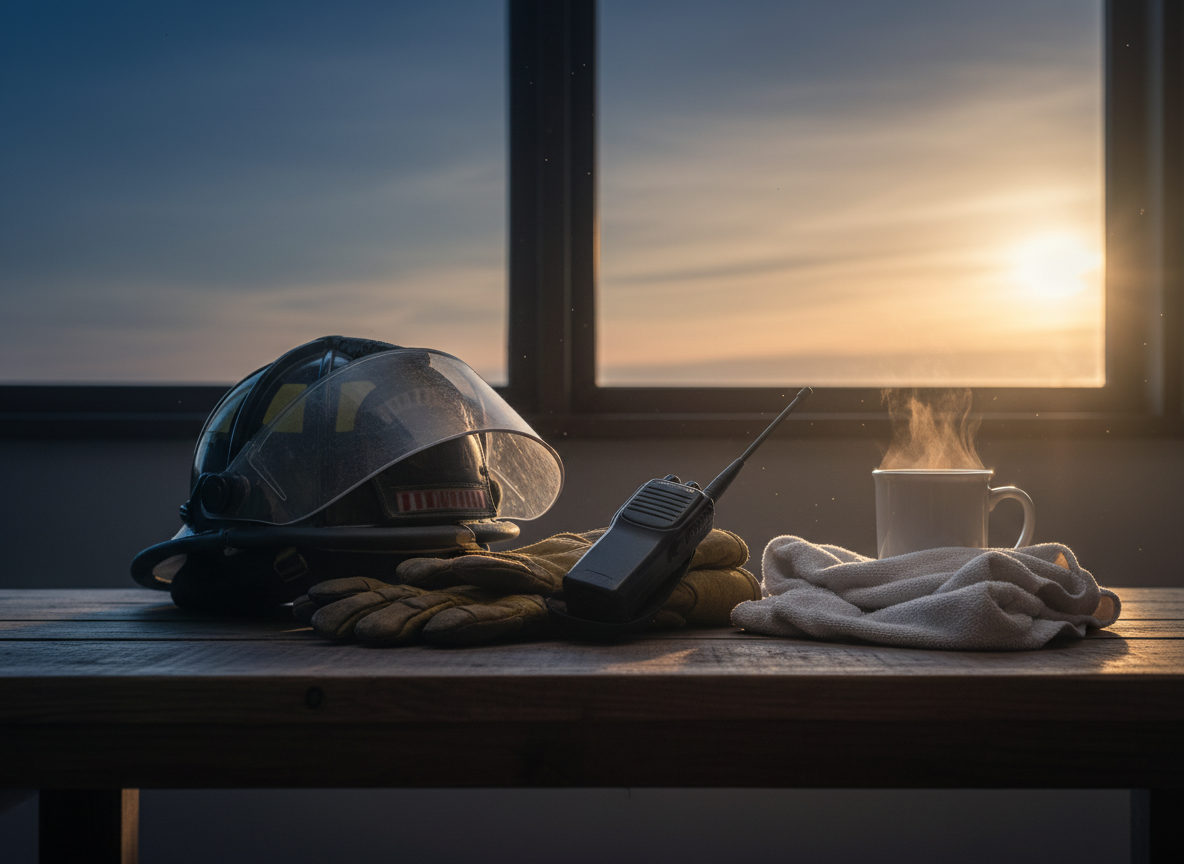

Mental Wellness for First Responders
The shift ends. The weight doesn’t have to.
Trauma does not disappear simply because the shift ends. This is a quiet, judgment-free place for the people who spend their lives responding to everyone else’s emergencies and deserve support for their own.
Built for those who carry the calls
These resources were created for first responders and emergency professionals carrying the emotional weight of the work long after the sirens stop police officers, firefighters, EMS personnel, dispatchers, corrections officers, emergency healthcare workers, and crisis responders. They address the cumulative trauma, emotional exhaustion, hypervigilance, grief, burnout, and silent mental health struggles that often develop in careers built around responding to crisis, tragedy, and human suffering.
Rather than promoting the idea that responders simply need to “be tougher,” the focus here is emotional survival, resilience, mental wellness, and the importance of addressing trauma before it destroys lives, careers, relationships, and emotional stability.
Know the Signs
The pressures that build over time
First responders are routinely exposed to situations most people never witness fatal accidents, suicides, overdoses, violence, death notifications, and line-of-duty losses. Carried without support, those experiences show up in real ways.
Emotional and mental toll
- PTSD and cumulative trauma exposure
- Hypervigilance and nervous system exhaustion
- Depression, anxiety, and emotional suppression
- Burnout, emotional detachment, and compassion fatigue
- Moral injury and the emotional cost of the job
How it can spill over
- Substance use and unhealthy coping mechanisms
- Family strain, relationship challenges, and isolation
- Suicide calls and line-of-duty loss
- Emotional numbness and difficulty decompressing
- Increased suicide risk when struggles go unspoken
Noticing these signs isn’t weakness. It’s the first step toward staying alive emotionally, mentally, and physically.
Coping & Recovery
Practical steps that help
Small, repeatable actions build long-term resilience. Start with one no one has to do all of them at once.
Decompress after the call
Use grounding and calming exercises to settle a keyed-up nervous system. Brief emotional check-ins after hard calls keep pressure from quietly accumulating.
Build steady routines
Sleep, movement, and time away from the job protect against burnout and compassion fatigue. Healthier coping strategies replace the ones that only mask the weight.
Stay connected
Isolation makes everything heavier. Lean on trusted peers, family, and people who understand the work. Naming what you carry, out loud, takes some of its power away.
Ask for support early
Trauma-informed counseling and peer support work best before things reach a breaking point. Seeking help is not weakness it’s part of staying in this career and in your life.

Supporting a Colleague
If someone on your crew is struggling
- Say what you notice, plainly. “You haven’t seemed like yourself lately” opens a door without cornering anyone.
- Listen without fixing. You don’t need the right words. Staying present matters more than solving.
- Take talk of suicide seriously. Stay with them and connect them to crisis support right away.
- Follow up. One check-in isn’t enough. Keep showing up, quietly and consistently.
Support Pathways
Find support built for your role
Profession-based support pathways offer grounding exercises, trauma-informed coping strategies, and crisis resources tailored to the realities of each role.
Law Enforcement & Corrections
Support for officers, dispatchers, corrections staff, and their families covering stress, trauma, burnout, emotional wellness, and finding help after difficult calls.
EMS & Fire Services
Support for EMTs, paramedics, firefighters, and their families. Help with tough calls, burnout, poor sleep, heavy emotions, and healing after hard events.
