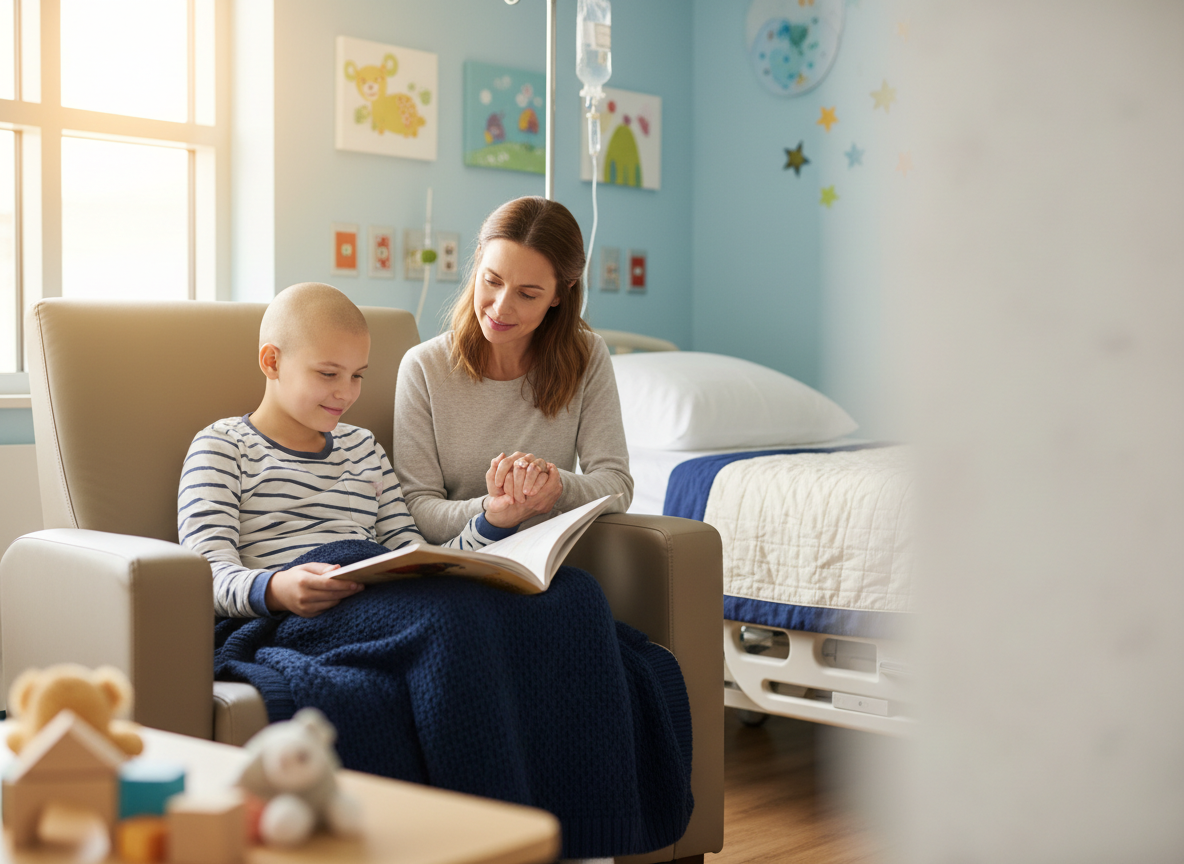

A Practical Guide
Braver Than Cancer
A practical guide for children, families, and caregivers facing pediatric cancer. Strength today. Hope tomorrow. Love always.

About the Guide
A pediatric cancer diagnosis can bring many emotions.
A child may feel scared, angry, sad, or confused. Parents and caregivers may feel shocked and overwhelmed. Brothers and sisters may also worry about what will happen next.
Some days may feel hopeful. Other days may feel very hard. There is no “right” way to feel. Every child and every family will have their own emotional journey.
Who It Supports
Support for Every Part of the Family
Cancer affects the whole family. This guide holds space for children, siblings, and the adults who love them.
For Children
Children may not always have the words to explain how they feel. Let your child know that all feelings are welcome. They do not have to act brave all the time.
For Siblings
Brothers and sisters may feel scared or confused. Make time to listen to them. Remind them that they are still loved and important.
For Caregivers
Parents and caregivers may experience many emotions at once. Give yourself permission to have difficult days. You do not have to be strong every moment.
Facing the Hard Days
Fear of the Unknown
Not knowing what will happen next can be one of the hardest parts of cancer. Children may have questions about treatment. Will it hurt? Will they lose their hair? When can they go home? When can they see their friends?
Answer questions in simple and honest ways. If you do not know an answer, you can say, “I don’t know, but we can ask.” Knowing that adults will listen can help a child feel safer.
One Step Forward
Take One Day at a Time
It can be easy to think about everything that might happen. Try to bring your attention back to today. What does your child need right now? What does your family need today?
Sometimes the next appointment, meal, bedtime, or quiet moment is enough to focus on. Small steps can make a difficult journey feel more manageable.
Emotional Support
Meeting Big Feelings
When Your Child Is Angry
Anger can be a normal response to cancer. A child may be angry about missing school. They may hate taking medicine. May become frustrated with changes to their body. They may simply be tired of being sick.
Try not to take every angry moment personally. Give your child safe ways to express those feelings. Talking, drawing, writing, music, movement, or quiet time may help.
When Your Child Is Sad
There may be days when your child feels sad. Listen without trying to immediately make the sadness disappear.
“I’m here.” “You can tell me how you feel.” “It’s okay to be sad.” “We will get through today together.”
Sometimes a child needs comfort more than answers.
THE BOOK & THE APP
Support at Every Step
A practical guide and a compassionate app built for children, families, and caregivers facing pediatric cancer together.
THE BOOK

Braver Than Cancer: A Practical Guide for Children, Families, and Caregivers Facing Pediatric Cancer
A compassionate, practical guide written for children, siblings, parents, and caregivers navigating pediatric cancer. Honest, hopeful, and grounded in love.
THE APP

LCH Brave Together
Pediatric Cancer Support App
Brave Together is a compassionate mobile companion for children with cancer and their families. The app offers age-appropriate coping tools, emotional check-ins, guided activities, and real-time encouragement designed to walk alongside your family through every difficult moment with courage, hope, and love.
Restoring a Sense of Control
Help Your Child Feel Involved
Cancer can make children feel like they have lost control. Look for small choices they can still make.
- Let them choose a movie.
- Ask which pajamas they want to wear.
- Let them pick a book, game, or activity.
- When appropriate, let them ask questions during medical visits.
Small choices can help a child feel more involved in their own life.
Keep Some Normal Routines
Treatment may change many parts of daily life. Still, familiar routines can bring comfort. Keep bedtime routines when possible. Celebrate birthdays and holidays. Stay connected with friends. Continue favorite family traditions when you can. Play games. Watch favorite shows. Tell jokes.
Cancer is part of your child’s life right now. It does not have to become their entire identity.